Knocking in a Reciprocating Compressor: How to Find the Source
A new knock in a reciprocating compressor is never normal. How to locate it, which knocks mean stop now, and what to measure before the unit runs again.
A new knock in a reciprocating compressor is never normal. Some knocks are minor, such as a loose valve cover, but others are early signs of failures that can wreck the cylinder, the crosshead or the frame. The aim is to locate the source quickly and decide whether the unit can keep running.
Where the knock comes from
Cylinder end: broken valve parts, liquid in the cylinder, a loose piston nut, the piston touching the head because the end clearance is wrong, or worn rider bands letting the piston drop.
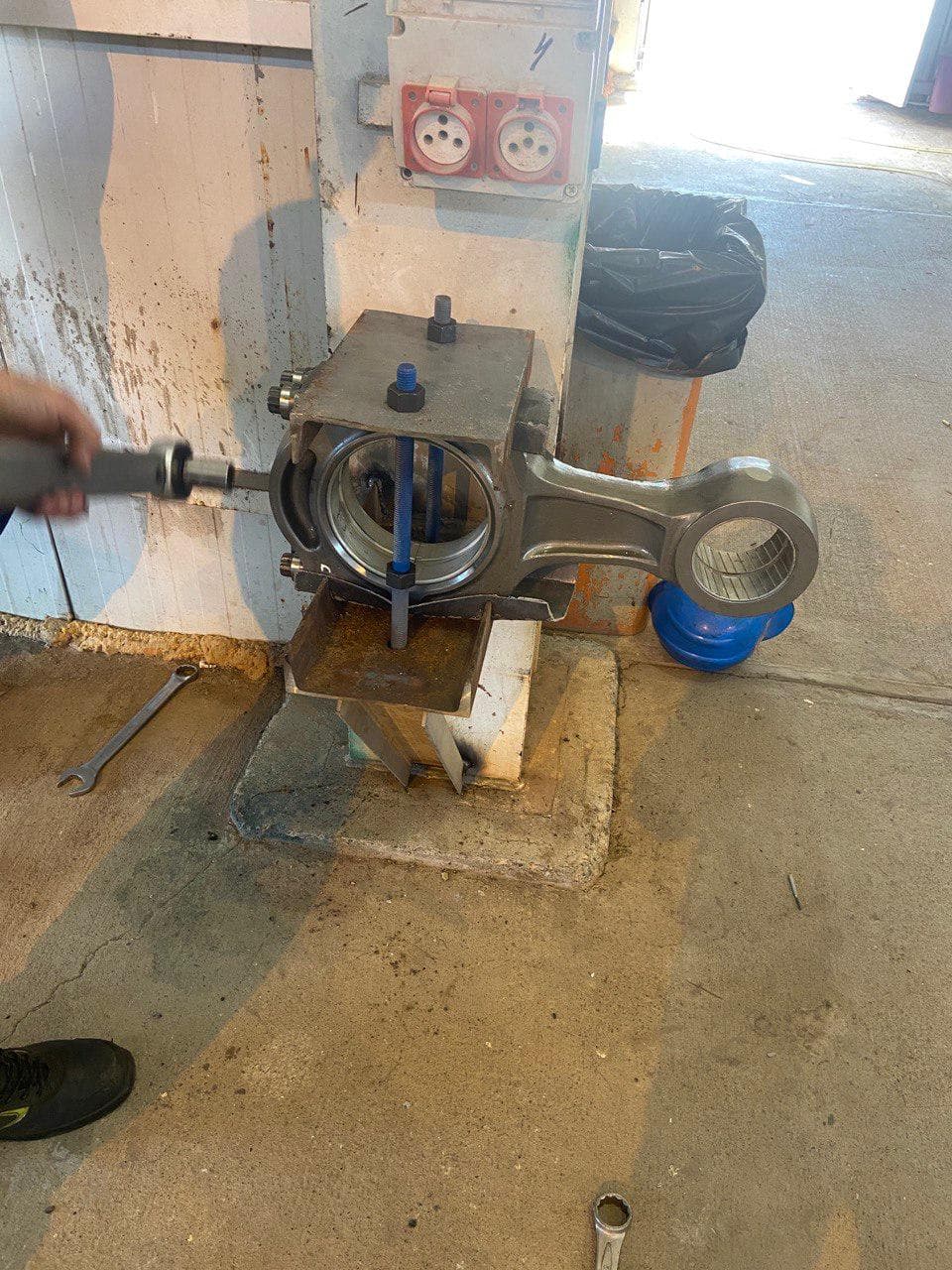
Crosshead and distance piece: a loose crosshead nut, excessive crosshead clearance, or a worn crosshead pin or bushing.
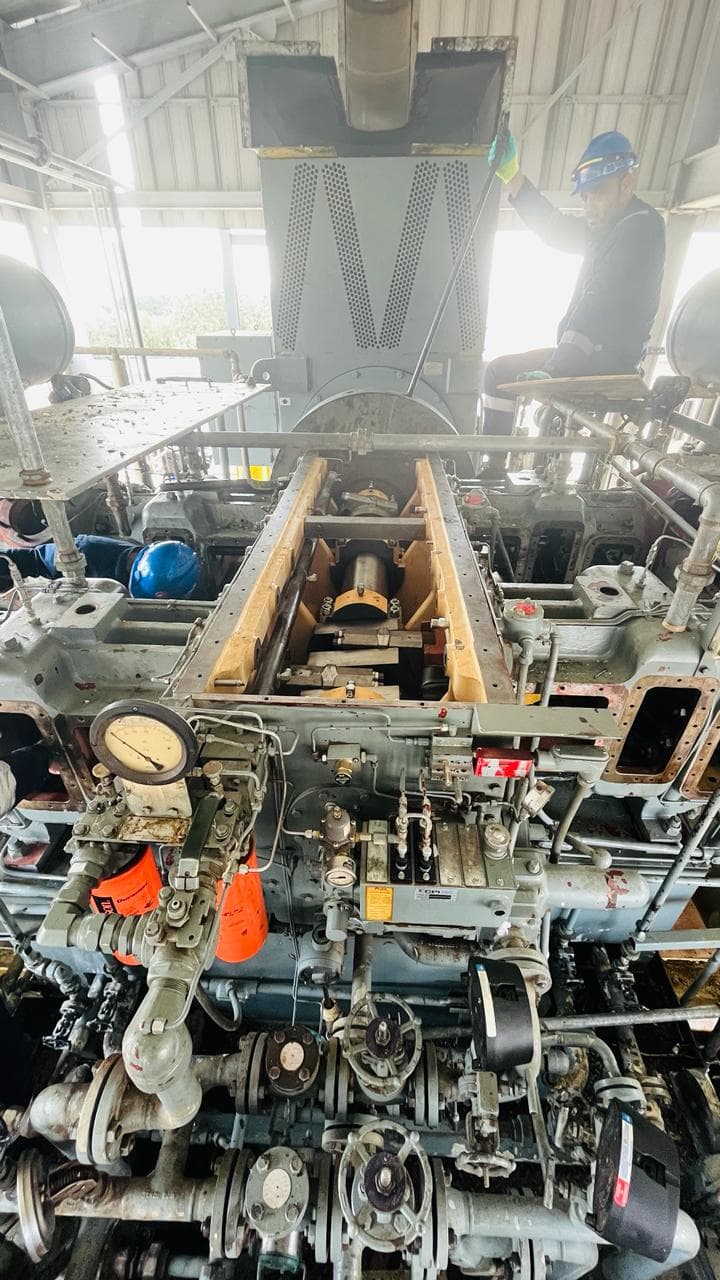
Frame: worn main or connecting rod bearings, low lube oil pressure, or loose components on the crankshaft.
Running off-design: if the load on the crosshead pin does not reverse enough during each revolution, the pin bushing is starved of oil and knocks. This happens when the unit runs outside the pressures it was designed for.
First checks on site
If liquid is suspected, for example a sudden heavy knock with a high scrubber level, stop the unit immediately. Liquid in a cylinder can break the piston rod.
Check lube oil pressure and frame oil temperature.
Use a mechanic's stethoscope or a vibration pen to compare the cylinder, distance piece and frame, and find where the noise is loudest.
Check valve cover temperatures and stage pressures for signs of a failed valve.
Ask whether operating conditions changed recently: pressures, unloader settings or speed.
When to stop
Stop at once for a sudden loud knock, signs of liquid, falling oil pressure, rising frame vibration or an overheating bearing. A steady knock that has been traced to a valve can often run until a planned stop, with close monitoring and a clear limit agreed with operations.
Before the unit runs again
Find the cause with measurements, not guesses: piston end clearances, crosshead clearance, bearing clearances, piston nut and crosshead nut torque, and piston rod run-out. Fix what is out of limit, record the as-left values, and watch the unit closely on restart.
Short Way diagnoses noise, vibration and running problems on reciprocating compressors across Iraq, and carries out the repair and overhaul that follows. If one of your units has started knocking, talk to our engineers.
Short Way Engineering Team
Compressor engineers at Short Way Compressor Solutions, Erbil, Iraq.
Need support with your compressors?
Our engineers are available for technical consultation across Iraq, with 24/7 response for critical services.
Contact Short Way Compressor Solutions